The season and where to find it
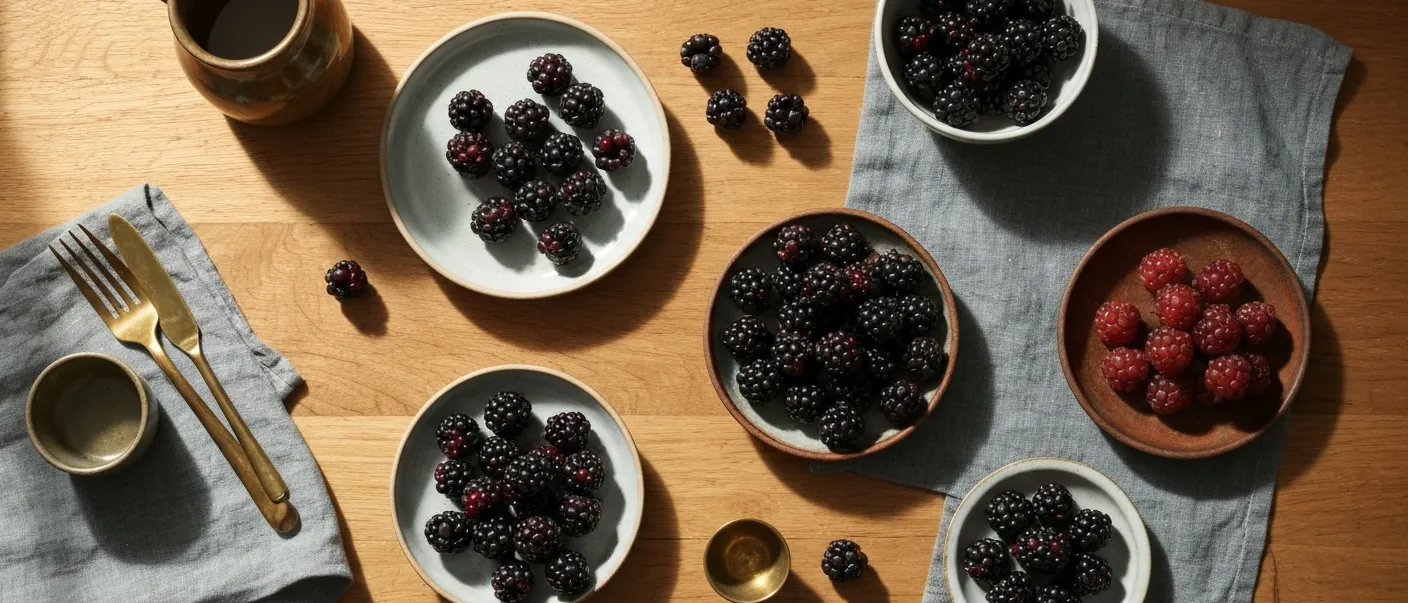
Late August is when the hedgerows start to deliver. The berries come in waves — the ones at shoulder height ripening first, the lower clusters following — and a good bramble patch in full fruit is one of the more quietly spectacular things the British countryside offers. By mid-September the picking is usually at its best: the berries fat, deeply coloured and sweet enough to eat straight off the stem.
You don't need a particular landscape for this. Blackberries grow along footpaths, railway embankments, the margins of parks, the back edges of allotments. The plant is opportunistic, and so is the tradition. What you do need is a container (a reused ice cream tub is the classic) and the willingness to come home with purple fingers.
A tradition that skipped no generation
It is one of those habits that moved through families almost without comment — not taught so much as absorbed. Grandparents led children to particular spots; those children, grown up, found themselves doing the same. No special equipment, no planning, no cost. The act of filling a container with free fruit from a common hedgerow is so uncomplicated that it has survived everything: supermarkets stocking blackberries year-round, the disappearance of most other foraging knowledge from everyday life, decades of people spending less and less time in the countryside.
There is something worth noticing in that. Most old food traditions in Britain require specialist knowledge or specific regional ingredients. Blackberrying asks for almost nothing, which may be exactly why it persisted.
What the folklore says
The date most associated with the end of blackberry season is Michaelmas — the feast of Saint Michael, falling on the 29th of September. The old belief, told in various forms across England, Wales and Scotland, holds that the devil fell into a bramble bush when cast out of heaven on that day, and cursed the fruit as he left. After Michaelmas, so the story goes, blackberries are spoiled — spat on, stamped on, or otherwise ruined by the devil's spite.
This is folklore, not botany. But it is not entirely wrong either. By late September the berries that remain on the stem are often past their peak: soft, watery and increasingly prone to mould. The weather turns, the fruit deteriorates, and a piece of vivid storytelling turns out to encode something practically true. Whether you put it down to the devil or to the weather, the warning holds.
Eating what you've gathered
The simplest approach is the most honest: eat them as they are, still warm from the sun. Beyond that, the British kitchen has long known what to do with a glut of blackberries. They have an affinity with apples — the two fruits overlap in season and balance each other well, the blackberry's intensity cutting through apple's gentle sweetness. Crumbles, pies and fools are the obvious destinations, but so is a jar of jam made to see the flavour through to winter, or a bottle of blackberry vinegar, sharp and dark and useful in salad dressings for months afterwards.
Blackberries also work well with game and red meat — the kind of pairing that feels intuitive once you've tried it, the fruit's acidity doing the same work as a sharp sauce. On breakfast tables they turn up with yoghurt, with porridge, with good bread and soft cheese. The point is that they need very little done to them. The hedgerow has already done most of the work.
Going out for them
A few practical things are worth knowing. Pick from places well away from busy roads — blackberries absorb what's in the air and soil around them, and roadside fruit is best left alone. Check a footpath map before you venture onto private land. Go in the morning if you can; the berries are firmer before the afternoon heat softens them. And pick slightly more than you think you need, because the ones at the bottom of the container always get a little crushed.
The best spots tend to be known locally — the kind of knowledge passed between neighbours and not written anywhere. Ask around. Someone always knows a good patch.