A cheese named after a pear
The name comes not from any ecclesiastical figure or deliberate provocation, but from a variety of pear — Stinking Bishop — used to make the perry in which the rind is washed during maturation. That perry, produced from old Gloucestershire orchards, drives the whole process. Without it, you'd have a very different cheese.
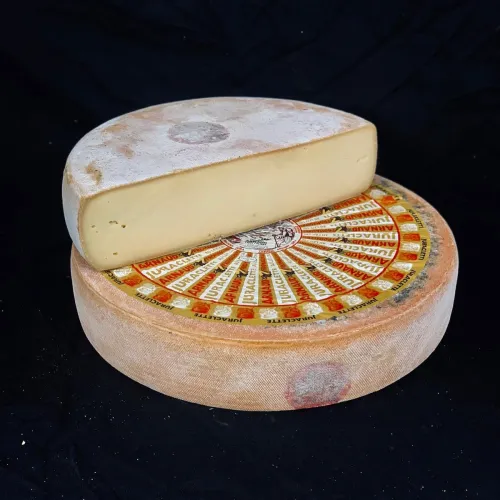
Stinking Bishop is a soft, washed-rind cow's milk cheese made in Gloucestershire, sitting within a European tradition of cheeses whose outsides are regularly bathed in liquid during ageing. The liquid encourages particular surface bacteria — chiefly Brevibacterium linens — that produce the characteristic sticky, orange-pink rind and the eye-watering smell that precedes the cheese into any room. As we explore in our piece on cheese rinds, a washed rind is doing real technical work: it's a controlled microbial environment, not simply a flavouring or a crust.
Why the smell and the taste are so different
The paste inside bears almost no relation to the rind outside. Strip away that orange exterior and what you find is a soft, pale interior — mild, creamy, slightly savoury, with none of the ammonia punch the nose was braced for. The rind's bacteria don't penetrate deeply into a well-made Stinking Bishop; they concentrate at the surface, which is exactly where they're supposed to be.
The smell is a signal of microbial activity, not a preview of bitterness or sharpness. Experienced cheese eaters know to trust the paste regardless of what the nose reports.
The perry connection matters to the flavour too, if subtly. Perry made from traditional pear varieties — more on its character and production in our perry article — carries a distinctive dry, faintly tannic quality very different from apple cider. As it soaks into the rind with each washing, it contributes a rounded, slightly fruity undertone behind the funk.
A moment of unlikely fame
Stinking Bishop was known to serious cheese lovers before the Wallace & Gromit film The Curse of the Were-Rabbit was released in 2005, but that film changed its cultural profile entirely. A scene in which the cheese plays a pivotal role sent sales soaring and introduced the name to audiences who had never considered buying anything with quite such a confrontational reputation.
That fame didn't change the cheese itself, but it cemented Stinking Bishop's place as an ambassador for British artisan cheesemaking — evidence of a domestic audience willing to move well beyond mild Cheddar given the right nudge.
Serving and storing it well
Temperature matters with a soft washed-rind cheese. Stinking Bishop should be brought to room temperature before serving — cold from the fridge, the paste firms up and the flavour closes in. Give it an hour out of the cold and the texture loosens to something almost spoonable at the centre.
It doesn't need much company. Good bread — something with crust and chew — is the natural partner. Boiled or baked potatoes work well too, absorbing the creaminess without competing with it. A glass of dry perry alongside is the obvious regional match: the two come from the same Gloucestershire landscape and the same fruit, so the pairing has a logic that goes beyond marketing.
Storage requires care. The rind needs to breathe slightly but not dry out. Wrap the cheese in waxed paper or cheese paper rather than cling film, which traps moisture and can encourage unwanted surface growth. Keep it in the least cold part of the fridge — the salad drawer or the door shelf — and expect the smell to assert itself. A dedicated cheese box, or at least a sealed container, is strongly recommended if you share a fridge with anyone who doesn't share your enthusiasm.
What it tells us about place
There is something satisfying about a cheese so thoroughly of its county. The cattle, the orchards, the perry pears, the cheesemaking tradition — all of it is Gloucestershire, and Stinking Bishop makes no attempt to disguise the fact. The best regional foods tend to be accumulations of local knowledge rather than inventions: decisions made over time about what to do with what a particular place produces.
Washed-rind cheeses are often avoided on smell alone. Stinking Bishop, precisely because it is so specific in its origins and so famous for the wrong reasons, is a sound place to begin understanding what the style is actually about.