Why tea pairing is worth taking seriously
Most of us choose our tea by habit — the same bag, the same mug, regardless of what's on the plate. The range of flavours across even a modest tea shelf is extraordinary: malty, floral, smoky, grassy, astringent, delicate. Those qualities interact with food just as surely as a wine's tannins or acidity do, and learning to work with them rather than against them changes what both the tea and the cake taste like.
The underlying principle mirrors good food matching generally: look for flavours that either echo each other or provide a deliberate contrast. A rich, sticky cake needs something with enough structure to cut through it. Something light and citrus-bright wants a tea that won't bulldoze the point.
Robust teas and rich bakes
Assam is the obvious starting point for fruit cake. Its malt character — that slightly bread-like depth — sits alongside dried fruit and dark sugar the way a firm handshake feels right: purposeful, well-matched. The tannins in a properly brewed Assam also do useful work, cleansing the palate between bites of something dense and sweet.
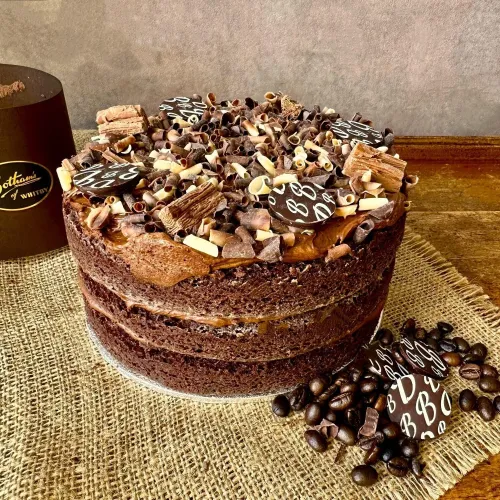
The same logic applies to dark chocolate. A smoky tea — lapsang souchong, or anything with that distinctive fired quality — meets the bitterness of high-cocoa chocolate without competing with it. The smokiness amplifies the roasted notes already present in good dark chocolate. It is the sort of pairing that surprises people the first time and seems obvious the second.
Floral and citrus combinations
Earl Grey is perhaps the most instinctively understood pairing in British tea culture, even if people rarely articulate why. The bergamot oil that defines it is citrus — specifically, a citrus that skews floral and slightly bitter. That makes it a natural companion for anything lemony: a lemon drizzle cake, a sharp lemon tart, a light sponge finished with lemon curd. The bergamot doesn't clash with the lemon in the food; it extends it, adding a more aromatic register.
Where Earl Grey goes wrong is alongside very sweet, very buttery bakes with no acidity to anchor them. Opposite a dense caramel traybake or an intensely chocolate brownie, the bergamot can start to taste soapy — not the tea's fault, simply the wrong pairing.
Green and white teas with delicate flavours
Green teas are the ones most people under-use with food. Partly this is because they require a little more care — water that's too hot turns them bitter. Partly it's because their flavour profile feels less obviously compatible with Western baking. In practice, their grassy, vegetal freshness makes them excellent alongside white chocolate, which has a creamy sweetness that can easily feel cloying without something clean to offset it. A Japanese-style green tea brings a slightly mineral edge that keeps white chocolate tasting interesting rather than heavy.
The same principle holds for very lightly flavoured sponges, shortbread with a restrained flavour, or anything made with matcha itself — where matching like with like creates a coherent, focused result rather than a muddled one.
A framework worth building on
Tea pairing travels well as an idea. A tin of good Assam alongside a quality fruit cake, or a box of Earl Grey next to a jar of lemon curd, makes a thoughtful gift precisely because there's a reason behind the combination — it's a small piece of practical knowledge the recipient can take away and apply.
It also reframes how people think about their tea shelf. Rather than reaching for whichever box is nearest, there's a logic to keeping a small range — something robust, something floral, something smoky, something green — that can be matched to the occasion and the plate. That's a more rewarding relationship with tea than most of us currently have, and it costs nothing extra to develop.
_JPGq80.webp)
_JPGq80.webp)