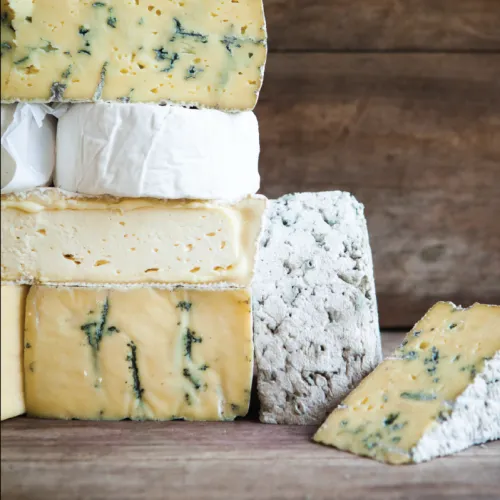
The rule that covers most cases
If the rind formed naturally during ageing, it is edible. If it was applied as a coating or wrapping, it generally is not. That distinction gets you most of the way there — it matters because the two types can look similar on a cheeseboard, until you bite into a mouthful of red wax.
Wax, plastic, and cloth bandaging are coverings added after the cheese is made. They peel, cut, or unravel away cleanly. Everything else — the powdery white bloom on a Brie, the sticky orange coat on a washed-rind cheese, the knobbly grey crust on an aged Cheddar or Comté — grew there, and there is no reason not to eat it beyond personal preference.
Why the rind tastes so different
The rind is where ripening begins. Moulds, yeasts, and bacteria work on the outside first and move inward gradually. A slice taken close to the rind on a young cheese can taste sharper, more ammonia-edged, or more complex than the centre — it has been ripening longer. That intensity is the point, not a flaw.
On bloomy-rind cheeses such as Brie or the British Baron Bigod, the white Penicillium camemberti mould contributes earthy, mushroomy depth that the pale interior paste never quite matches. Strip it off and you lose a significant layer of what the cheesemaker was aiming for.
Washed-rind cheeses — repeatedly wiped with brine, beer, cider or similar during ageing — develop their characteristic orange-pink surface from bacteria called Brevibacterium linens. That bacterial coat is responsible for the pungent, savoury smell that makes the style so polarising and so good. Eating the rind is eating the cheese properly.
Hard rinds: eat them or keep them
Natural rinds on hard cheeses — the rough outer edge of an aged British territorial, a Lancashire, a Red Leicester — are technically edible but often too thick or chewy to bother with on the plate. That is a textural judgement, not a safety one.
Throwing them away, however, is a waste. Hard cheese rinds, particularly from long-aged grana-type cheeses in the Parmesan style, dissolve slowly into stocks, soups, and braises, contributing body and savoury depth that is difficult to achieve any other way. A small bag kept in the freezer is one of the more useful things a home cook can maintain. We cover this and other approaches to leftover cheese in our waste-free cheese article.
Rinds that really do come off
Some rinds are not food. Red or black wax on Edam or Gouda is obvious enough. Clear plastic shrink-wrap can mimic the look of a natural rind on younger, moister cheeses — if it peels cleanly in a sheet, it is not rind. Cloth-bound Cheddars are wrapped in calico or muslin during maturation; the cloth can trap fat and develop surface moulds, and while the paste beneath is the cheese, the fabric itself is not.
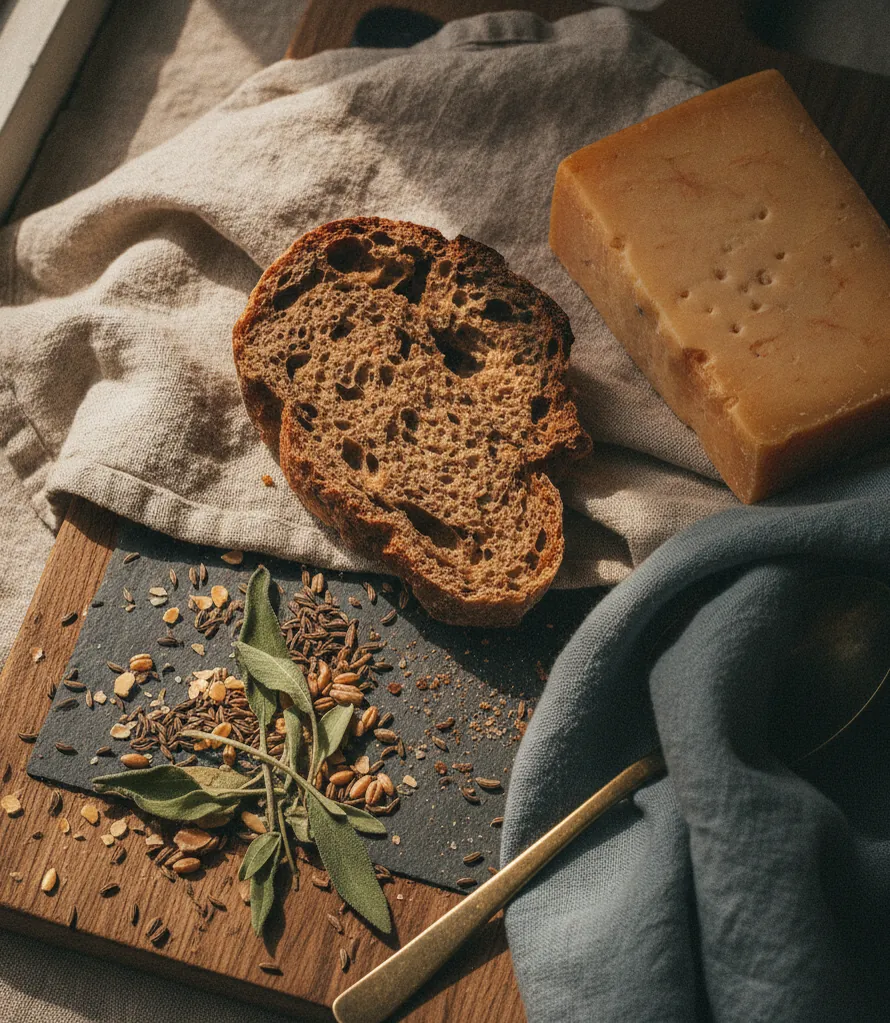
Some producers rub their rinds with ash, charcoal, or herbs. Ash rinds — common on soft goats' cheeses in the French style, and on British producers making similar styles — are edible and add a faint mineral bitterness. Herb or spice crusts are generally eaten too, though they vary considerably in intensity.
How understanding the rind changes how you cut
A wedge of washed-rind cheese served with rind on each slice gives everyone at the table the full range of flavour, from the softer, milkier centre to the assertive edge. Removing the rind before serving produces a milder result and wastes the most characterful part.
With a large truckle or hard cheese, cutting inward from the paste side rather than always slicing from the outside in is worth considering. The rind-adjacent slice can taste noticeably different from one taken in the middle of a young piece, though this difference narrows as the cheese matures and the interior catches up. Taste as you go rather than assuming a cheese is uniform from edge to edge.