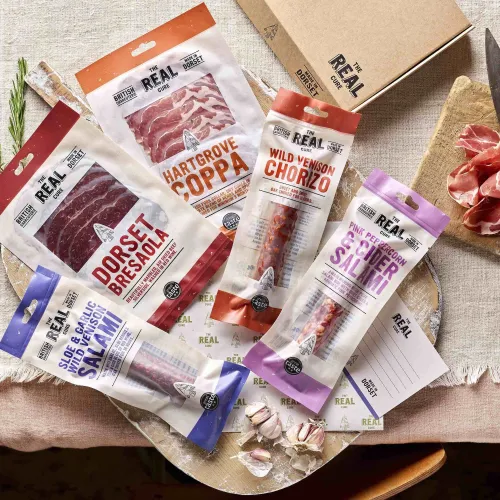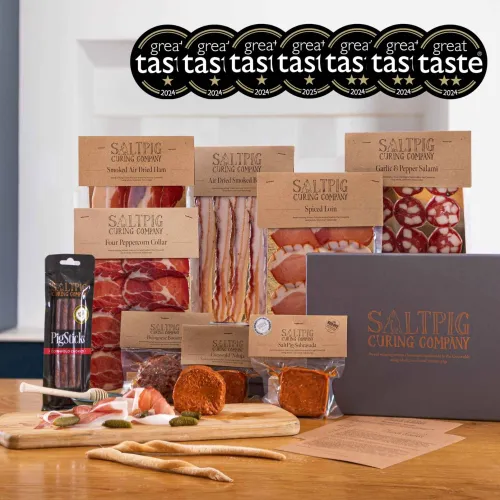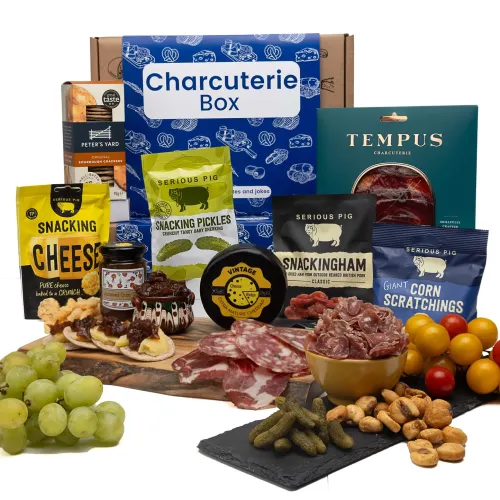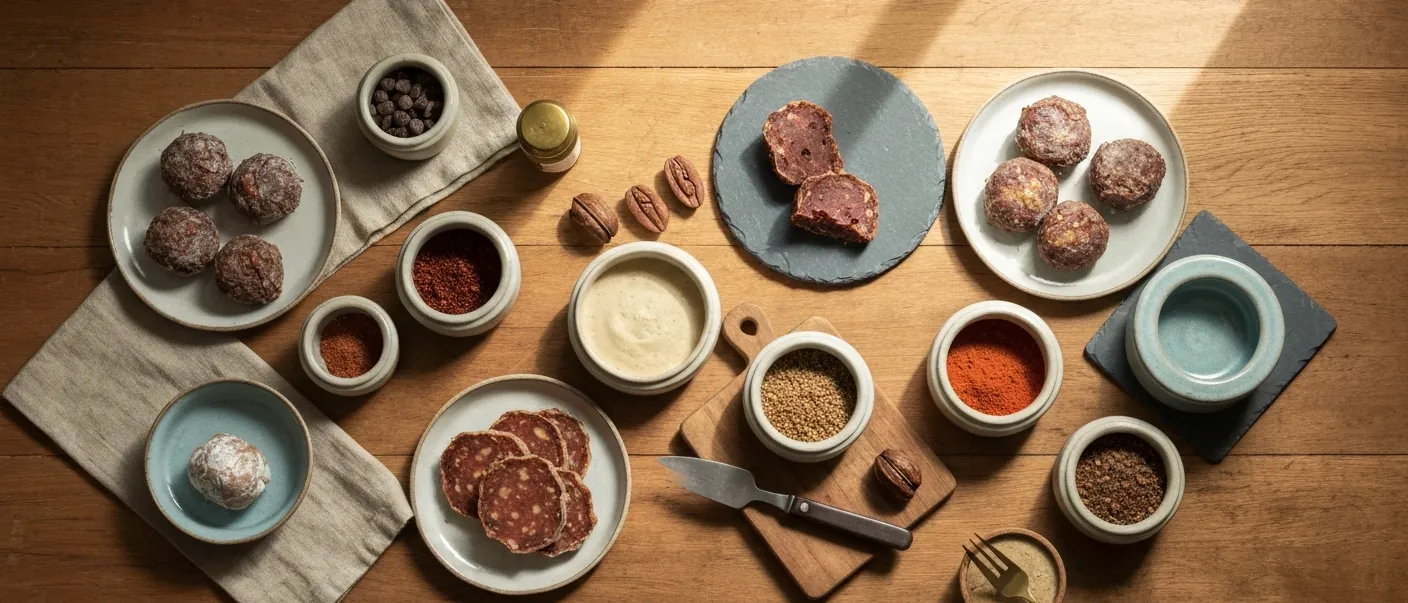
Start with the meat, not the board
The mistake most people make is filling space. They reach for whatever looks appealing at the deli counter, arrange it in overlapping fans, then scatter crackers and grapes around the edges and call it done. A charcuterie board only works when the accompaniments are chosen in response to the meat — its fat content, its cure, its intensity.
Think of the meat as the fixed point. Everything else is there to cut through it, complement it, or carry it.
Bread does what crackers cannot
For fatty, richly cured meats — a good salami, coppa, or lardo — bread is the right vehicle. A cracker shatters and competes; bread absorbs and supports. The fat in the meat needs something with a little chew and a mild flavour of its own, something that won't dissolve at the first bite. A sourdough with an open crumb, a baguette sliced on the diagonal, a sturdy rye — all of these give the meat somewhere to go.
Crackers work best with drier, more delicate charcuterie, or alongside cheese rather than meat. Reaching for them as the default is worth questioning.
The role of acid
Without something sharp on the board, cured meat becomes relentlessly rich — enjoyable for a few slices, then cloying. Cornichons are the classic answer: their tartness and crunch do exactly what is needed, quickly and cleanly. A good cornichon should snap, not bend.
Beyond cornichons, consider pickled onions, caperberries, or a spoonful of grainy mustard. A lightly pickled vegetable — fennel, cauliflower, even a few pickled walnuts — adds variety in texture. The point is not to overload the board with condiments, but to ensure acid is present and reachable throughout.
Butter deserves a place at the table
In France, unsalted butter served alongside cured ham — particularly a jambon de pays or well-aged jambon sec — is thoroughly ordinary. The butter softens the salt of the meat and adds a cool, clean richness that cream cheese or any other spread doesn't replicate. It works because it gets out of the way.
Use unsalted butter, served cold enough to hold its shape but not so cold it won't spread. A small dish works better than leaving a block on the board — easier to use and more considered.
Cheese alongside meat, not instead of it
Cheese and charcuterie share a board happily, but the selection logic changes when meat is present. Avoid anything too pungent or too young and squeaky — a washed-rind cheese in full cry will overpower most charcuterie, and a rubbery young cheese adds nothing. Firm, aged cheeses sit far more comfortably: a well-made Cheddar, a crumbly Lancashire, a chunk of Comté if you're leaning French.
Keep the cheese selection small. One or two well-chosen pieces are more useful than five competing ones. The meat should remain the centrepiece; cheese is there to add variety between bites, not to become its own separate board.
Proportion and restraint
A board overloaded with garnishes — dried fruit, honeycomb, nuts, olives, three types of chutney — can look impressive while making eating harder. Each element dilutes the others. The strongest boards tend to have fewer components, each chosen deliberately: meat, bread, something acidic, perhaps a little butter, one or two cheeses. That's a complete thought.
If you want to add fruit, keep it simple. A few fresh grapes or a couple of slices of pear work because they're mildly sweet and not too assertive. Figs can be good alongside something salty and aged. Dried fruit and nuts tend to push things in a sweeter, snackier direction that works against the savoury focus of good charcuterie.
Restraint is the quality that separates a considered board from a crowded one.