Buy slowly, eat well
The instinct to fill a larder all at once is understandable but usually counterproductive. You end up with a shelf of impulse buys that don't cohere, jars opened once and forgotten, oils that go rancid before you reach the bottom. The better approach is gradual and deliberate: add one excellent thing at a time, use it, understand it, then add another. Quality at keeping-pace rather than panic-pace.
What makes an artisan product worth the larder space is the same thing that makes it keep well — care in the making. Traditional methods, minimal processing, honest ingredients. These aren't merely selling points; they're the reason a well-made preserve or a properly aged vinegar will reward you months after purchase in a way that a supermarket equivalent simply won't.
The foundation: preserves and honey
A larder built around good preserves can always produce something for breakfast, a cheese board, or a quick sauce. British independent makers produce jams, marmalades, chutneys and fruit cheeses in varieties that bear almost no resemblance to mass-market versions — less sugar, more fruit, genuine depth of flavour. Look for small-batch production and short ingredient lists.
Honey deserves more thought than it usually gets. Single-origin British honeys reflect the landscape they come from: heather honey from moorland carries a thick, almost gelatinous texture and resinous intensity, while a lighter wildflower honey from lowland meadows will be floral and gentle. Both keep almost indefinitely if stored correctly. Crystallisation is normal — gentle warmth will restore a clear set.
Oils, vinegars, and the patience they require
A good oil is one of the most frequently wasted things in a larder. Cold-pressed British rapeseed oil has a clean nuttiness and a higher smoke point than most olive oils — it suits this climate and is increasingly well made by small producers across the country. Store it away from light and heat, and use it within the period the maker recommends.
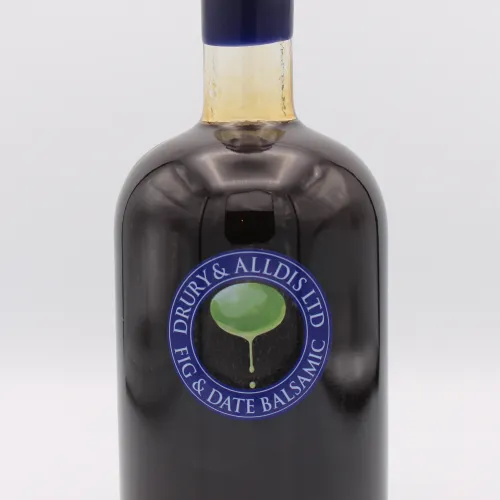
Vinegars reward patience differently. Traditional cider vinegar, produced slowly rather than industrially, develops a complexity its fast-made equivalent lacks entirely. Malt vinegar made with care has a rounded acidity rather than a harsh one. The difference is noticeable in the eating, and neither is interchangeable with cheap versions.
Cured meats, hard cheeses, and dark chocolate
All three are products that time and craft improve, all keep respectably well when stored properly, and all are categories where British independent producers have raised the standard considerably.
Hard cheeses — a properly aged cheddar, a crumbly Lancashire, a firm territorial-style block — hold in good condition for weeks once wrapped correctly. The flavour of an artisan aged cheese develops as you eat through it; a piece near the rind tastes markedly different from the same cheese cut fresh, and that variation is part of the pleasure.
British cured meats have a tradition worth knowing. Air-dried and slow-cured products from small producers are nothing like sliced supermarket packets — the texture is firmer, the saltiness more measured, the flavour of the underlying meat actually present. They reward being eaten simply.
Dark chocolate with high cocoa content and clear provenance keeps well and improves almost any impromptu dessert or afternoon pause. Buy it in bars large enough to be genuinely useful, and store it somewhere cool and dry, away from anything aromatic.
What a working larder actually looks like
It isn't full. A larder that works is one where everything is being slowly used and thoughtfully replaced, not one where jars accumulate unexamined at the back. Rotation matters — move older stock forward, check for changes in texture or smell, and don't keep something past its best out of a vague sense that waste is worse than eating something mediocre.
Dried goods — lentils, beans, grains — round out the picture. They're the least glamorous items on the shelf but arguably the most useful. Paired with a good oil, a strong cheese, or a jar of chutney, they become meals. There are British heritage grain growers and specialist importers worth seeking out if the subject interests you.
The larder that repays effort is one built around ingredients that do more than one thing: a chutney that works with cold meat and with cheese, a honey that goes into a dressing as readily as onto toast, a dark chocolate that eats well alone and improves a sauce. That flexibility is what a good keeping larder is actually for.

_cd5y-ai_pngq80.webp)