Organic: the one with legal teeth
Walk the shelves of any independent deli or farm shop and you'll find all three terms within arm's reach of each other, often at similar price points. They are not interchangeable. Each describes a different philosophy, a different set of practices, and — crucially — a different relationship with legal accountability.
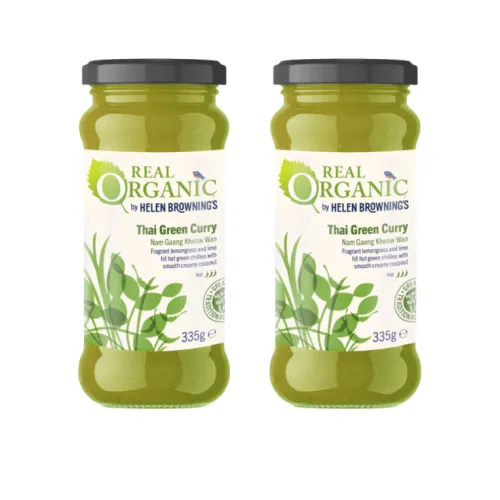
In the UK, organic is a protected term. A producer cannot print it on a label without certification from an approved body, and that certification involves regular inspection against defined standards. Broadly, those standards prohibit synthetic pesticides and artificial fertilisers, and set rules around animal welfare and soil management.
What organic cannot promise is more nuanced. Certification is about inputs and methods, not outcomes. An organic farm certified for only a few years may have soil still recovering from decades of conventional treatment. Conversely, a small grower who cannot afford the certification process might farm just as conscientiously. The label tells you the rules were followed; it does not tell you the full story of the land.
For a shopper who wants a reliable baseline — something independently verified rather than self-declared — organic certification is the most robust signal currently available in British food and drink.
Biodynamic: organic, and then some
Biodynamic farming starts where organic ends. Everything prohibited under organic standards is prohibited here too, but the approach goes considerably further, drawing on principles developed by Rudolf Steiner. Biodynamic practice treats the farm as a self-contained living system, with strong emphasis on soil vitality, composting, and timing agricultural work in relation to lunar and astronomical cycles.
That last part is where many people raise an eyebrow, and it is worth being straightforward: the astronomical dimension is genuinely contested scientifically. You do not have to accept it wholesale to recognise that biodynamic producers tend to be intensely attentive to their land. The holistic, closed-loop thinking behind the method has won serious respect among winemakers and vegetable growers alike.
Biodynamic producers can apply for certification — in the UK, through the Demeter organisation — and that process involves its own rigorous inspection. Like organic, a certified biodynamic product has been externally verified; it is not a self-applied claim. Look for the Demeter mark if you want confirmation that a product has met the full standard rather than simply being influenced by biodynamic thinking.
Regenerative: a direction, not yet a standard
Regenerative agriculture is the term attracting the most attention right now — and the least regulatory clarity. The concept focuses on actively rebuilding soil health, increasing biodiversity, and drawing carbon back into the ground, rather than simply limiting harm.
There is currently no unified legal definition of regenerative agriculture in the UK, and no single certification body with the standing that organic bodies have. Any producer can describe their practices as regenerative without independent verification. Some do so with complete integrity; others use the word because it sounds good.
This is not an argument against regenerative methods — the underlying principles are sound, and some of the most exciting work in British farming is happening under this banner. It is an argument for asking questions. When you see the word on a label, look for specifics: cover cropping, reduced tillage, hedgerow restoration, livestock integration. Concrete details are a far better guide than the word alone.
Reading labels in practice
These three approaches exist on something of a spectrum. Many regenerative farmers also farm organically; many biodynamic producers would describe their work as inherently regenerative. The boundaries are porous, and the most committed producers often hold all three sets of values simultaneously.
A practical way to think about it: organic gives you legal certainty about what was not used; biodynamic gives you that plus a certified commitment to a whole-farm philosophy; regenerative signals intent that is worth investigating further but is not yet guaranteed by any external standard.
None of the labels tells you whether something tastes good. But for shoppers who care about how food is grown — and who are willing to pay the prices that careful farming demands — knowing what you are actually buying is the beginning of spending that money well.