Why the cut matters
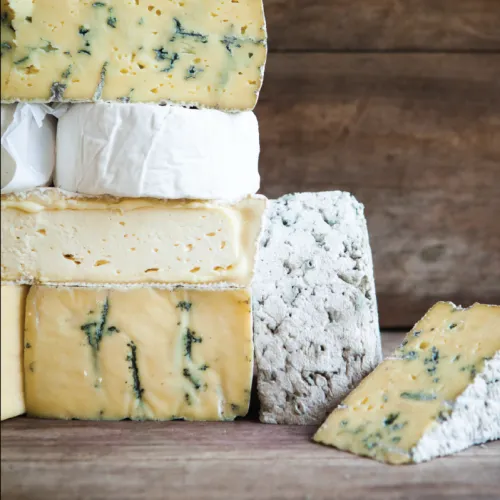
Cheese isn't uniform. A wedge of aged Comté or a properly made territorial Cheddar has distinct layers of flavour that shift from the centre outward — the interior is usually the richest, most complex part, while the outer portion, closer to the rind, is firmer and often sharper. How you cut determines whether each person at the table gets a fair share of that range, or whether one person wins the lot while everyone else makes do with the edges.
This isn't precious food-world thinking. It's just the geometry of the thing.
The point-to-rind rule
For any triangular wedge — the shape you get from most hard and semi-hard cheeses sold pre-cut — the principle is straightforward: cut from the point toward the rind, slicing across the wedge rather than straight across it. Each slice then contains a thin tip of the interior and a proportional strip of the outer paste. Nobody ends up with only rind, and nobody takes the heart of the cheese for themselves.
For a whole wheel or half-wheel, the same logic applies: divide into wedges first, then slice those wedges point-to-rind. A round cheese cut in long straight strips across the middle leaves the person who arrives last with nothing but rind and resentment.
The one rule everyone breaks with Brie
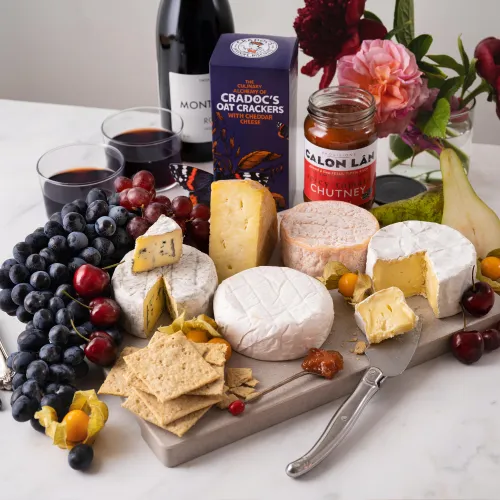
Soft, bloomy-rind cheeses like Brie or Camembert have a particular vulnerability. The nose — the pointed tip of the wedge — contains the most oozing, yielding paste and is widely considered the best part. Cutting it off in a single blunt slice across the point is, among cheesemongers, a minor offence. It reserves that richness for one person and leaves a flat-ended wedge with a disproportionate amount of rind for whoever comes next.
The correct approach with a soft wedge is to cut lengthways, in thin slivers that run from tip to rind, so the paste-to-rind ratio stays consistent throughout. It takes a moment's thought the first time, but it becomes second nature quickly.
The right knife for the job
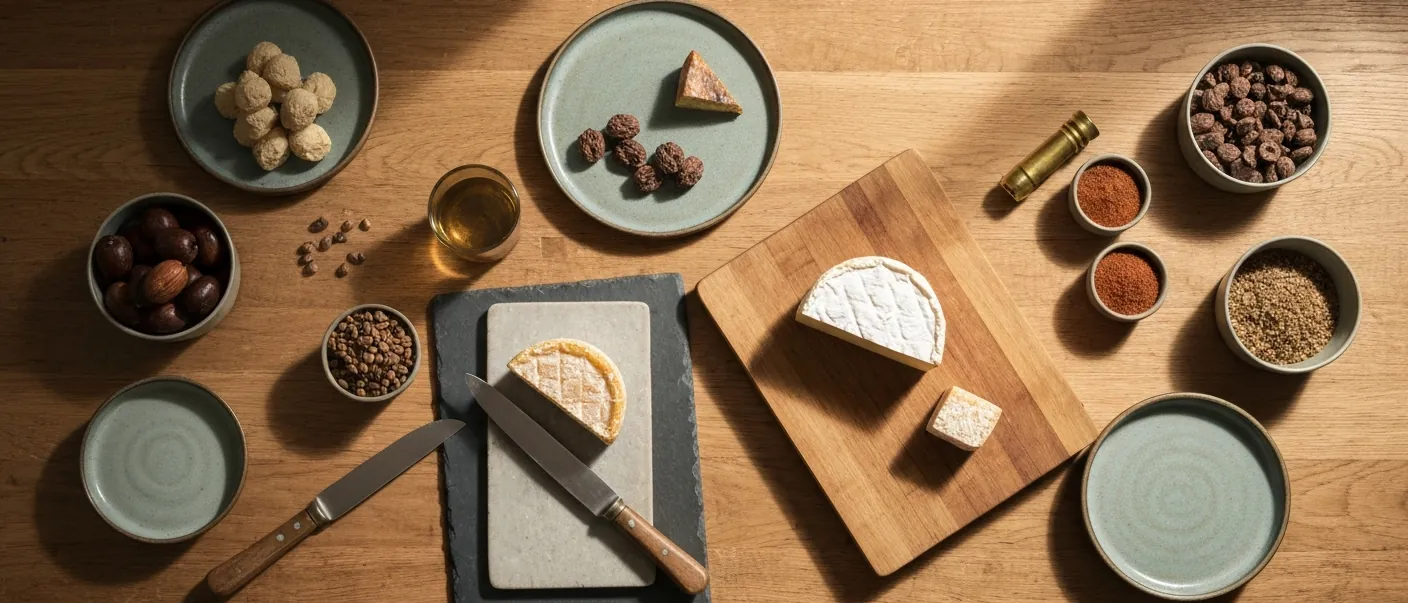
Using the same knife for every cheese on a board is the most common practical mistake, and it genuinely does affect flavour. A stiff, heavy blade that works well on a crumbly Lancashire will drag through a ripe Époisses and smear it rather than cut cleanly. Soft cheeses need a thin, flexible blade — or better still, a wire — to slice without the paste sticking and tearing. Hard cheeses need a firmer, broader blade that can apply even downward pressure.
Specialist cheese knives exist for a reason, but you don't need a full set. A thin-bladed slicing knife for soft cheeses and a sturdy cook's knife for hard ones will cover most situations. The main thing is to keep the blade clean between cheeses, especially moving from something strong and pungent to something mild — cross-contamination of flavour is a real and avoidable problem.
Why it matters more with craft cheese
With a mass-produced supermarket block, cutting technique is relatively inconsequential. The flavour profile is consistent throughout, and there isn't much nuance to preserve or distribute.
With a small-batch farmhouse cheese, the story is different. A cloth-bound Cheddar that has matured for the better part of a year, or a hand-ladled goat's cheese from a small herd, has variations in texture and flavour that develop across the paste. Cutting carelessly doesn't just affect etiquette — it means someone gets the cheese as it was meant to be experienced, and someone doesn't. For the cheesemaker who took months over that wheel, it seems a shame.
None of this requires ceremony. A few moments of thought about what shape the cheese is, where its richest part lies, and which knife will cut cleanly — that's all it takes. The cheese does the rest.