An island that feeds itself
The Isle of Man's food reputation rests on an entire supply chain — sea, field and smokehouse — each producing something genuinely worth seeking out. Self-sufficiency here was never a trend; it was simply the condition of island life. What strikes you, eating well on the island, is the shortness of the chain. The scallop diver, the sheep farmer, the kipper smoker are not figures in a heritage story. They are still at work.
The kipper, and what Peel does differently
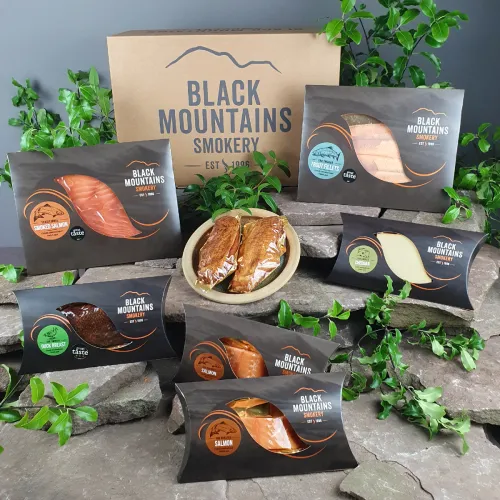
The Manx kipper is the island's most recognisable export. The herrings are split, dry-salted and cold-smoked over oak chips in Peel smokehouses that have been operating since the Victorian herring boom. That continuity matters: the methods used today descend directly from those developed when Peel was one of the busiest fishing ports in the Irish Sea.
What separates a Manx kipper from the mass-produced kind is the oak smoke and the restraint with brine. The result is a fish that is richly savoury but not aggressively salty, with a deep amber colour that comes from time in the smoke rather than artificial dye — a practice that is, regrettably, common elsewhere. Simply grilled or left to stand in a jug of boiling water, the kipper remains a morning institution on the island in a way that feels less nostalgic than straightforwardly practical.
The Peel smokehouses are small operations. Buying direct, or from a supplier who names the smokehouse, is the surest way to get the genuine article.
Queenies and the sea's sweeter side
Where the kipper represents the robust, salt-and-smoke side of Manx seafood, the queenie sits at the opposite end of the register. These small queen scallops — harvested from the cold, clean waters around the island — have a sweetness and delicacy that larger king scallops rarely match. They carry their own protected status, and we have covered them in depth separately; they are central to any honest account of what the island produces.
Loaghtan lamb from a very old breed
The Manx Loaghtan is a primitive breed — small, dark-fleeced, often four-horned — that has grazed the island for centuries. The meat is lean and distinctly flavoured, closer in character to game than to commercial lamb, with a depth that comes from the breed and from the rough upland grazing the animals prefer. It is not a mild or neutral ingredient, and that is precisely the point.
We have covered Loaghtan lamb in its own article. What matters here is that it is genuinely native and represents something the island has held onto while most of British agriculture moved towards fast-growing, high-yielding breeds.
Dairy and the quieter staples
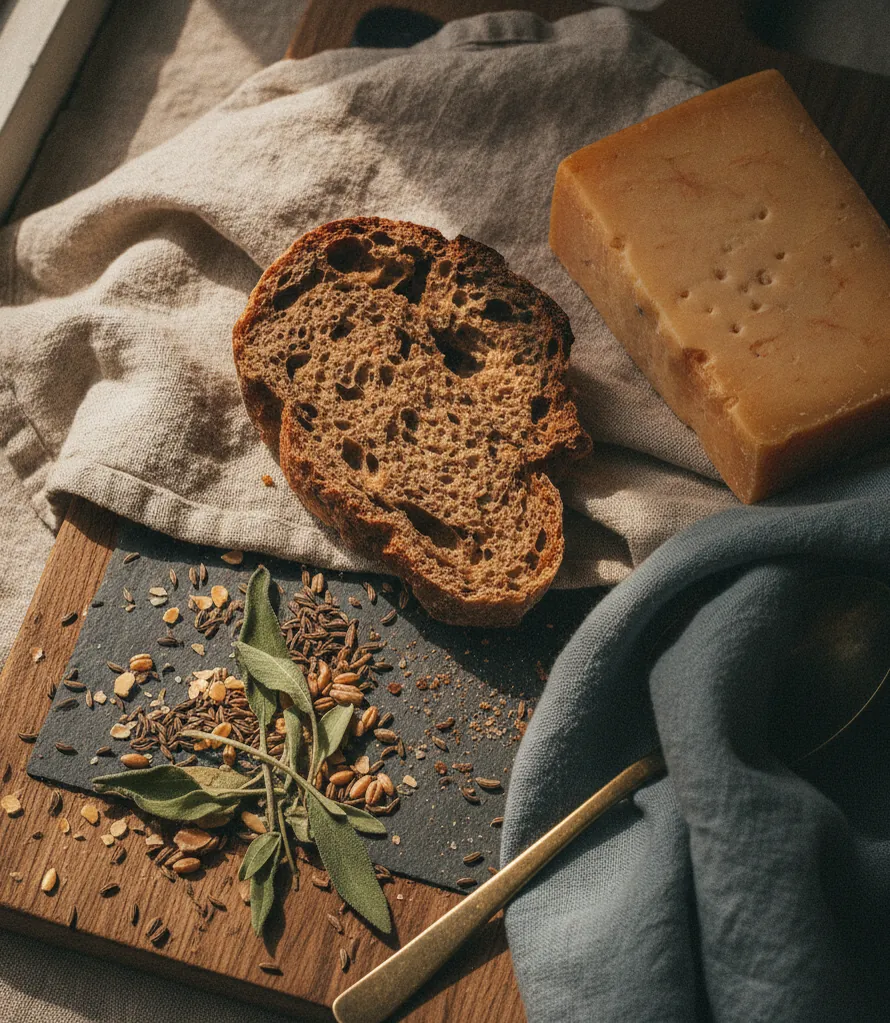
Manx dairy tends to be overshadowed by the more dramatic ingredients, which is unfair. The island's pasture — green, mild and well-watered — produces milk with good fat content, and the butter and cheeses made from it have the rounded, clean flavour of livestock that are not being pushed for maximum yield. Island cheese production is modest in scale, but the quality is consistent, reflecting the underlying quality of the milk.
Genuine local dairy — where you can reasonably trace the product back to named farms — is rarer than it should be in Britain. On the Isle of Man, it remains the norm rather than the exception.
Why it holds together as a food identity
What makes the Isle of Man's food culture coherent, rather than just a list of regional specialities, is that each of these things — the kipper, the queenie, the Loaghtan, the dairy — reflects the same underlying circumstance: a community that has maintained the infrastructure to produce its own food at a small, human scale. The smokehouses are still in Peel. The Loaghtan flocks are still on Manx hill ground. The fishing boats still go out.
That is not something every region of Britain can say, and it gives the island's ingredients a grounding worth understanding before you buy or eat them. The quality is real, but it is inseparable from the context that produced it.