The cattle that shaped an island's food culture
Start with the cow, and much of Guernsey's food story follows naturally. The Guernsey breed — golden-coated and recognisable — produces milk with an unusually high butterfat content and a deep yellow colour that comes from carotene. That colour is a signal of genuine richness, and it flows through almost everything the island makes from dairy. The cream is thick enough to stand a spoon in. The butter is a shade closer to gold than anything from a standard supermarket chill cabinet.
That butter is a working ingredient in the island's baking, and the flavour it lends to traditional recipes isn't easily replicated with substitutes.
Gâche and gâche mêlée
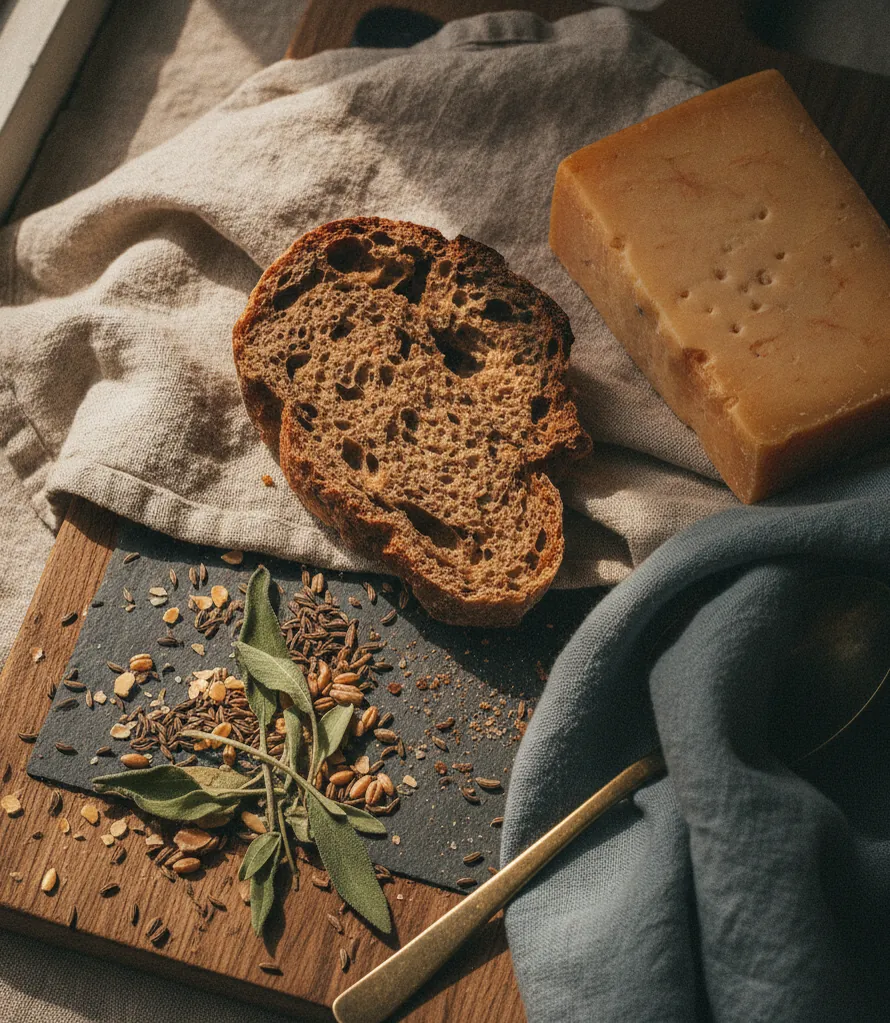
Guernsey's two most characteristic baked goods share a name and a lineage but differ sharply in character. Gâche (pronounced roughly 'gosh') is a fruit bread — close-textured, enriched with Guernsey butter, and packed with dried fruit. You slice it thickly and eat it spread with yet more butter. It appears at island celebrations, fundraising teas, and kitchen tables in equal measure.
Its cousin, gâche mêlée, is denser still — an apple cake made with the same good butter and the cooking apples that island kitchen gardens have always grown. Where gâche is eaten as you might eat bara brith or a Scots black bun, gâche mêlée is more a pudding proposition, best eaten warm. Both recipes exist in dozens of family variations across the island, with differences in spicing, fruit, and technique that locals take seriously.
Ormers — the shellfish you have to earn
If Guernsey has one most distinctive food, it is probably the ormer. Related to abalone, these flat, ear-shaped shellfish cling to rocks in the island's shallow waters. The flavour is intense and savoury in a way that most British shellfish simply aren't.
Gathering is restricted to ormering tides — the very low tides that occur in the winter months — and strict rules govern who may collect them, how many, and by what means. You must be present in person and collect by hand; no diving or mechanical assistance is permitted. The rules exist because ormer populations are fragile and demand has always outrun supply. Anyone hoping to gather ormers should check current regulations through the relevant Guernsey authorities before setting out, as they are specific and enforced.
Traditionally, ormers are beaten to tenderise them, then cooked long and slowly with belly pork and vegetables. Every Guernsey family seems to have their own version, and visitors are unlikely to eat the dish outside the island except by luck or good connections.
Greenhouses, tomatoes, and the kitchen-garden tradition
Guernsey's mild climate and long growing season made it one of Britain's most productive sources of early vegetables. The glasshouse industry — vast ranges covering large parts of the island — sent tomatoes and early flowers to the mainland until imported produce made the trade less viable. Many of those glasshouses have gone, but the kitchen-garden tradition persists in private plots across the island.
Guernsey tomatoes still carry a particular reputation: grown in good soil with serious sun, they have the kind of flavour that reminds you what a tomato is supposed to taste like. The island's approach to produce has always been less industrial and more personal than mainland growing tends to be, and that shows in quality rather than volume.
How these traditions connect
What is striking about Guernsey's food specialities is how self-contained they are. The cattle supply the milk and butter; the butter goes into the baking; the kitchen gardens provide the apples for gâche mêlée and the tomatoes for the table; the tides deliver ormers to those patient and knowledgeable enough to find them. No distant ingredients, no continental fashions — a food culture built entirely from what the island has, and that specificity is what makes it worth seeking out.