Two methods, very different results
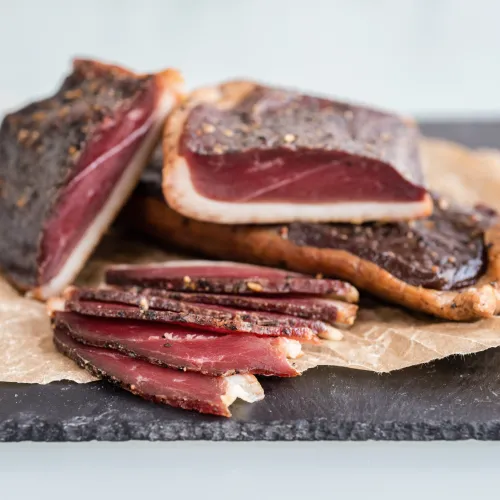
Dry curing is the older process. Salt and curing agents are rubbed directly onto the meat, and time does the rest. As the salt draws moisture out, the weight drops — sometimes considerably — and what remains is richer and more concentrated in flavour. Fry a dry-cured rasher and it holds its shape, colours properly, and behaves the way bacon in food writing always implies it should.
Wet curing works differently. The meat is either submerged in brine or, in industrial production, brine is injected directly into the muscle to cut the process from days down to hours. Water goes in rather than out. That white liquid weeping into the pan is largely water and dissolved protein — not fat rendering, as many people assume. The rasher steams in its own moisture rather than frying, and both texture and colour suffer.
How to read the pack
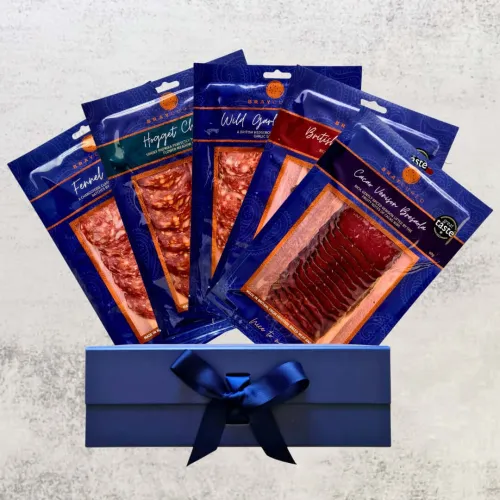
British food labelling rules require processors to declare added water if the finished product contains more than a set percentage. Look for the words "added water" on the front or back of pack. Their presence signals a wet cure; the higher the percentage declared, the further the balance has shifted toward volume over flavour.
Some packs carry a weight loss statement instead. A dry-cured product may declare that it lost a percentage of its original weight during curing — water removed rather than added — which tells you the producer invested time rather than brine.
"Dry cured" as a descriptor is meaningful and should accurately reflect the method. What it does not tell you is how long the cure took. There is a real difference between a two-day industrial dry cure and one that runs over a week or more. The longer cure produces deeper flavour and a firmer texture; the shorter one is an improvement on injected brine, but not by as wide a margin as the shared label suggests. Where a producer specifies curing duration, that transparency is usually a good sign.
Weight, price, and what you are actually buying
A pack of wet-cured bacon sold by weight includes the brine that was pumped in. Cook it and that weight leaves the pan as steam and liquid. Dry-cured bacon, priced higher per kilogram at the counter, shrinks far less — so the gap in cost per portion of cooked meat is smaller than the raw price comparison implies.
Wet curing is not fraudulent or without purpose. Brining has a long, legitimate history, and for some uses a small amount of added moisture is perfectly acceptable. The problem is buying wet-cured bacon while expecting dry-cured results — which is a labelling literacy issue rather than a product one.
What the cure does not cover
Curing method is one measure of quality; the meat itself is another, as are breed, feed, and husbandry. A slow dry cure on mediocre pork remains mediocre. The cure concentrates what is already there, which is why producers who source carefully tend also to cure carefully — the two commitments usually travel together.
It is also worth separating curing method from the question of curing agents — the nitrates and nitrites present in most commercial bacon. That chemistry is covered in our nitrates piece. The Wiltshire cure article looks at one of Britain's most distinctive regional traditions, which combines aspects of both wet and dry methods in a way that sits outside the simple binary. Neither topic needs repeating here, but both are worth reading alongside this one.
At the counter
If you are buying unpackaged bacon from a butcher or deli counter, ask. Most independent curers will explain their method readily — it tends to be a point of genuine pride. Look for a deeper, darker colour in the meat and a drier surface; wet-cured bacon often appears slightly pale and tacky. Pre-sliced dry-cured rashers may feel firmer to the touch.
The broader principle is straightforward: the more honestly a label or producer describes the process, the more likely it is that the process is worth describing.