Two legal categories, very different methods
Gin is defined by juniper, but the law draws a sharper line than that. Under UK and EU spirits regulations, distilled gin must derive its flavour by redistilling a neutral base spirit in the presence of botanicals. The spirit passes through the still a second time with juniper, coriander, citrus peel, or whatever the maker has chosen; heat and vapour do the extracting. London Dry — covered separately on this site — takes that principle to its strictest conclusion, permitting nothing but water after distillation.
Compound gin takes a different route. The botanicals — or pre-made botanical extracts — are steeped directly into neutral grain spirit and left to macerate, then filtered and bottled without going near a still. No redistillation. This is why compound gin is sometimes called 'cold compounded' or, less charitably, 'bathtub gin' — a nod to its historical association with shortcuts and dubious results.
Why compounding is not automatically inferior
The reputation is understandable but incomplete. Cold maceration, done slowly with whole botanicals and a quality base spirit, is a legitimate craft process. Some characterful modern gins are compounds: the botanicals steep for days or weeks, and without heat, delicate aromatic compounds that would be driven off in a still survive intact. The result is often noticeably coloured — golden, amber, or faintly green — because the plant matter has had time to leave its mark. A pale, clear gin with flavour concentrate added is a different product, though both occupy the same legal category.
The difficulty is that compounding covers an enormous range. At one end, a small maker hand-packing fresh botanicals into good spirit and waiting a fortnight. At the other, a bulk producer stirring a proprietary flavour compound into industrial alcohol. Both are legal, and the category name alone tells you nothing about which you are getting.
How to read a label for clues
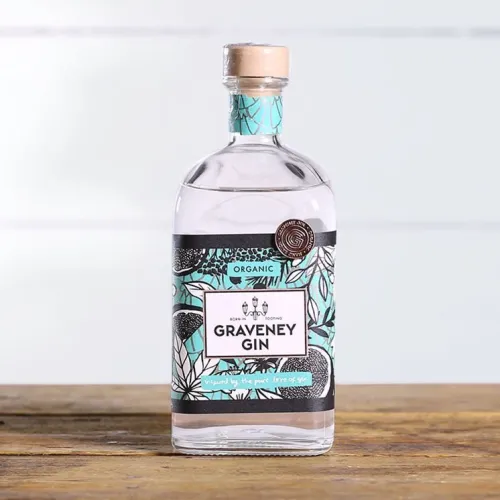
The most useful word to look for is distilled. If the label says 'distilled gin' or references a specific still or distillery process, the maker is legally required to have redistilled with botanicals — a meaningful guarantee. If the label says only 'gin' with no further qualification, it may well be a compound, though that is not a verdict on quality.
Look also at how the producer describes their process. Phrases such as 'cold macerated', 'steeped', or 'compounded' are honest signals that no still was involved. A maker proud of their compounding method will usually say so; they know the stigma and they know their answer to it. A bottle that says very little — no mention of process, no named botanicals, no indication of how it was made — is a warning sign. In that case, price is often the clearest guide.
Colour is another quiet tell. A compound gin made with real botanicals will frequently show some tint from maceration, particularly if the recipe includes berries, hibiscus, or spices. Colour can be adjusted before bottling, so this is not a firm rule; but a gin with a faint golden warmth and a slightly oily texture is more likely to have had extended botanical contact than a crystal-clear bottle with a generic juniper note.
Where each style fits
Distilled gin, especially the London Dry style, is the default for classic mixed drinks. The botanicals are precise, the spirit clean, and the flavour stable in a cocktail. Compound gins often have a softer, rounder character that suits simple serving — good ice and a single garnish rather than several competing flavours.
Neither approach owns the category. The craft gin revival has produced exceptional examples of both methods, and the more interesting small producers tend to be open about their process in a way that makes the conversation easier. Asking how a gin was made is a perfectly reasonable question in a good independent bottle shop — and the answer, or the hesitation before it, is revealing.